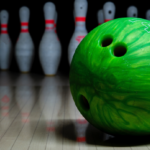

At SpareZ Bowling, we’ve watched millions of strikes roll down our lanes — but the real magic happens in those last few feet, when a single bowling pin takes a glancing blow and triggers a spectacular chain reaction. In slow motion, it’s like a choreographed dance: the ball crashes into the pocket, the head bowling pin deflects into its neighbors, and a wave of energy sweeps across the pin deck.
But there’s more to a bowling pin than meets the eye. Understanding how it’s built, why it falls, and what its movement says about your throw can help you become a smarter, more consistent bowler.
Anatomy of a Bowling Pin
A bowling pin might look simple, but every detail is designed for consistent performance. According to USBC standards, each bowling pin measures 15 inches tall, weighs between 3 pounds 6 ounces and 3 pounds 10 ounces, and has a diameter of 4.75 inches at its widest point.
Under the glossy white coating is a core of hard maple wood, chosen for its durability and resilience. Modern versions use a tough plastic or Surlyn shell to withstand thousands of impacts while keeping a smooth surface. The shape — wider in the belly, narrower at the neck — makes a bowling pin stable enough to stand but responsive enough to topple when struck with the right angle and force.
Why the Bowling Pin Falls
When your ball hits a bowling pin, physics takes over. The first concept is pin deflection — when the ball or another pin strikes, the pin moves in the path of least resistance, carrying energy to the next pin in line. This domino-like effect is what causes the dramatic sweep you see in a strike.
The pocket — the space between the 1 and 3 pins for right-handers (1 and 2 for left-handers) — is the sweet spot. Hitting here allows the ball to maintain momentum and create the most efficient chain reaction. A head-on hit to the lead bowling pin often results in “splits” because the energy doesn’t travel through the pins in the right pattern.
The Moment of Impact
The instant your ball makes contact with a bowling pin, the outcome of the shot is largely determined. In that split second, physics, precision, and technique all combine to dictate whether you leave a single pin standing or clear the deck.
- Ball entry point
Entering too high in the pocket (closer to the head pin) can drive the ball through the pins too directly, often leaving the 4-pin or 6-pin. Entering too low in the pocket can weaken the chain reaction, increasing the chance of leaving a corner pin. The ideal entry point sends the ball into the pocket with just the right amount of deflection, maximizing pin scatter.
- Ball speed
If the ball is thrown too fast, it can slice through the pins before they’ve had time to transfer energy to one another, reducing the likelihood of a strike. Too slow, and the ball may lack the force to complete the chain reaction, causing pins to fall lazily or remain standing. Matching your ball speed to the lane conditions is key for consistent results.
- The domino effect
The goal is to have each bowling pin strike another at the optimal angle. For example, the head pin ideally takes out the 2 and 3 pins, which then cascade into the rest of the deck. If one pin misses its target, the chain reaction is broken, leading to common leaves like the 7-pin or 10-pin.
At this moment, milliseconds and millimeters matter. Even a subtle change to your release angle, ball rotation, or speed can drastically alter the outcome. Understanding the dynamics of impact allows you to make real-time adjustments — whether you’re bowling for fun with friends or fine-tuning your game for league play here at SpareZ.
Decoding Bowling Pin Action Like a Pro
Once you understand what happens the instant your ball contacts a bowling pin, the next step is learning to read the aftermath. This is what bowlers call “pin action” — the motion, trajectory, and energy of the pins after impact.
Strong pin action means the pins aren’t just toppling; they’re flying, bouncing, and colliding with others to keep the chain reaction alive. Weak pin action, on the other hand, often leaves stubborn corner pins or awkward splits because the energy didn’t transfer efficiently.
- Scatter pattern
This is the gold standard. Pins explode outward in multiple directions, increasing the chances of every pin being touched. You’ll see side walls and kickbacks in play, with pins ricocheting into others to clean up the deck.
- Falling straight back
This usually means your ball is hitting too head-on or with too little entry angle. The pins may drop, but they’re not carrying across the deck, leading to corner pins that remain untouched.
- Dead pinfall
Pins slump or fall without much bounce. This often signals that your ball lost energy before reaching the pocket — possibly due to too little rotation, poor surface match, or hitting the dry part of the lane too early.
Pro bowlers and seasoned league players at SpareZ constantly watch these patterns. If the pins are falling flat, they’ll adjust ball speed, change their target, or even switch balls mid-game to regain the explosive scatter they’re looking for.
By training yourself to read pin action, you transform each frame into instant feedback. Whether you’re chasing your first 200 game or just trying to convert more spares, knowing how to interpret what the pins are telling you can be the difference between frustration and a new personal best.
Common Bowling Pin Leaves and What They Mean
When a bowling pin (or several) remains standing after your first ball, it’s not just bad luck — it’s feedback. Each pin leave tells a story about your shot, from your entry angle to your ball’s energy at impact. Learning to interpret these clues can help you make the right adjustment before your next throw.
- 10-Pin (for right-handers)
The classic corner pin. Your ball likely entered the pocket a bit light, losing hitting power before reaching the last pin on the right.- Adjustment: Move your feet slightly right or increase your ball speed to drive through the pocket more strongly. You could also add a touch more hook to create a sharper entry angle.
- 7-Pin (for left-handers)
The mirror image of the 10-pin leave, often caused by the ball losing energy before hitting the far-left corner.- Adjustment: Move your feet slightly left or increase rotation to improve pin carry to the 7-pin area.
- 4-Pin
Usually means your ball hit the pocket too high, entering with too much angle or too early of a hook. The ball drives past the head pin and misses the proper deflection.- Adjustment: Move your feet a board or two right (left for left-handers) or decrease hook by adjusting your wrist position or targeting a drier board.
- 6-Pin
Often the result of the ball entering the pocket too high from the opposite side, common for left-handers.- Adjustment: Similar to the 4-pin — reduce hook or make a small lateral move opposite your dominant hand.
- Washout (1-2-4-10 or similar)
Caused by hitting the head bowling pin too light or at the wrong angle, sending the ball past the front pins without proper deflection.- Adjustment: Target closer to the head pin and ensure your ball retains enough energy to carry through the mid-lane and into the pocket.
- 7-10 Split
The toughest leave in bowling. Usually caused by a high hit on the head pin with too much ball deflection.- Adjustment: Focus on pocket hits with the right angle to keep the head pin in play for corner pin carry. For the spare attempt, aim to bounce one pin off the back wall into the other.
By reading each pin leave like a coach would, you can make quick, informed changes — turning frustrating frames into opportunities for higher scores. At SpareZ, we see this skill as the bridge between casual bowling and consistent, competitive play.
Practical Tips for Better Bowling Pin Action
Improving bowling pin action isn’t just about throwing harder — it’s about controlling the way your ball enters the pocket and transfers energy. Here’s a step-by-step approach we recommend at SpareZ to help you turn your pin observations into higher scores:
1. Watch Every Pin
After your first shot, don’t look away. Study how each bowling pin reacts — whether it flies across the deck, falls straight back, or stays stubbornly in place. This is your most valuable feedback.
2. Fine-Tune Your Ball Speed
If pins are falling flat or leaving corners, adjust your speed. Slightly faster speeds can help the ball drive through the pocket, while slightly slower speeds can give the ball more time to hook and hit at the optimal angle.
3. Adjust Axis Rotation for Entry Angle
Your ball’s rotation affects its path into the pocket. More rotation creates a sharper entry angle for stronger pin scatter, while less rotation can help control deflection if you’re coming in too steep.
4. Match Equipment to Lane Conditions
The right ball surface and coverstock can make the difference between weak pinfall and explosive strikes. If the lanes are oily, use a ball with more surface to grip earlier. On dry lanes, a polished ball can help conserve energy for the pins.
5. Use Small Moves, Not Big Swings
Most of the time, fixing a leave doesn’t require a dramatic change. Move your feet one or two boards, or shift your target slightly on the lane. Small adjustments keep your mechanics consistent while improving results.
6. Practice Reading Common Leaves
Each pin leave tells you something. Use practice games to intentionally play different pocket angles and see how the pins react. Over time, this will make your adjustments faster and more instinctive during league or competitive play.
7. Keep Your Mind in the Game
Even the pros leave pins. The difference is they make the spare and adjust for the next frame. Focus on what you can control — your approach, release, and adjustments — and let the pin action guide you.
By combining close observation, small targeted adjustments, and equipment that fits the lane, you’ll see stronger, more consistent bowling pin action frame after frame. And with every strike, you’ll know it wasn’t luck — it was skill.
Master the Art of Bowling Pin Action and Level Up Your Game
At SpareZ Bowling, we believe every bowler has the potential to improve — and understanding bowling pin action is one of the fastest ways to get there. Each frame offers feedback: how the pins fell, why they stayed up, and what you can change next time.
Whether you’re chasing your first 200 game, looking to win your next league night, or simply wanting to impress your friends with more strikes, the key is observation and adjustment. From the moment of impact to the last pin toppling, every detail tells a story — and now you know how to read it. So grab your ball, step up to the lane, and put your new pin-reading skills to the test.