
At SpareZ Bowling, we believe the game becomes even more exciting when you understand what’s happening beneath the surface—literally. One of the most fascinating aspects of bowling is bowling ball motion—a dynamic blend of physics, friction, and technique that plays out over the span of just a few seconds. Whether you’re a beginner or a league regular, grasping the science behind the ball’s journey can deepen your appreciation for every frame—and maybe even help improve your performance.
Every roll can be broken down into three key phases: skid, hook, and roll. Each phase is influenced by the bowler’s release, the ball’s construction, and the condition of the lane. Let’s explore what happens from the moment the ball leaves your hand to the instant it hits the pins.
Phase 1 – The Skid
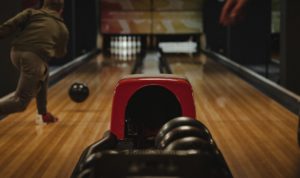
The skid phase begins the moment the bowling ball touches the lane. At this stage, the ball is primarily moving forward with minimal traction. It hasn’t gripped the lane yet—it’s gliding over the oil pattern. This phase is where bowling ball motion is at its most deceptive; it may look like the ball is simply sliding straight, but this is where the groundwork for the hook is being laid.
Lane oil plays a critical role here. The ball’s surface and the lane’s oil pattern work together to determine how long the skid phase lasts. A polished ball with a smooth surface will glide further, while a ball with a rougher finish will begin to dig into the lane sooner. The initial ball speed also affects this phase—a faster release keeps the ball in the skid phase longer, delaying the transition to the hook.
Phase 2 – The Hook
Next comes the hook phase—the most visible and dramatic part of bowling ball motion. This is when the ball begins to shift direction, curving toward the pins. It’s the point where forward momentum gives way to angular motion, thanks to a mix of friction and rotational energy. This phase is crucial for positioning the ball to hit the pocket correctly.
Friction increases as the ball moves past the oiled portion of the lane and encounters more dry surface. Angular momentum—created by the bowler’s rev rate and hand rotation—comes into play here. A high rev rate and strong axis tilt generate a sharper hook, while a smoother release might result in a gradual arc. Ball construction also influences this phase; asymmetrical cores tend to create more aggressive hooking motion.
Phase 3 – The Roll
The roll phase is the final act in the three-part motion. At this point, the ball has completed its hook and begins rolling forward in a stable, end-over-end motion toward the pins. The energy stored during the previous phases is now fully directed into impact. How well the ball enters this phase determines how effectively it transfers that energy into the pins.
Hitting the roll phase too early or too late can significantly affect pin carry. If the ball reaches this phase too soon, it may lose energy before impact. Too late, and it might deflect off target. This is why core dynamics and precise release timing are so important. When executed correctly, the roll phase delivers that satisfying strike that bowlers chase every game—and it’s a clear indicator of well-managed bowling ball motion.
Beyond the Three Phases – What Really Shapes Motion
While the three phases describe the ball’s journey on the lane, they don’t tell the full story. Many variables before and during the throw affect how that motion plays out. The bowler’s hand position, rev rate, axis rotation, and even wrist angle all contribute to the shape and consistency of the ball’s path.
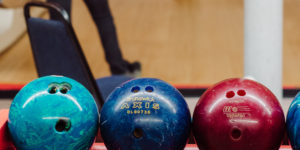
One often overlooked factor is ball weight. Choosing a bowling ball that’s too heavy or too light for your strength and skill level can impact your ability to control the throw, which in turn affects how the ball moves through each phase. The right fit allows for a smoother release, better rotation, and more consistent results—regardless of how advanced you are.
Lane conditions further complicate things. Oil patterns can shift and break down over the course of a session, making it important for bowlers to observe how their ball motion evolves and make small adjustments. At SpareZ Bowling, we provide quality, well-maintained equipment to help every bowler focus on improving their game—not worrying about the gear.
In short, bowling ball motion isn’t just physics in a vacuum. It’s a living system, shaped by a mix of technique, conditions, and personal comfort. And understanding how to work with those elements is a huge part of growing as a bowler.
The Hidden Rhythm Behind Every Shot
Understanding the science of bowling ball motion gives you more than just trivia—it gives you insight. The skid, hook, and roll phases create a rhythm that happens in every throw, whether you’re aware of it or not. When you learn to recognize and influence these phases, the lane becomes less of a mystery and more of a canvas for strategy and skill.
At SpareZ Bowling, we encourage every bowler to become a student of the game. The more you understand what’s happening beneath your ball, the more control you gain—and the more satisfying each strike becomes. So next time you step up to the lane, don’t just throw—watch, learn, and enjoy the science behind every roll.